

This is the question we get asked more than any other. Not “which model should I buy?” and not “how long does installation take?” It’s always: “What will it cost to run?”
The honest answer is: it depends on the tub. Not in a vague, hedge-everything sense. It genuinely depends on the insulation, the cover, the set temperature, and how often you use it. We’ll give you real numbers here so you can work it out for yourself.
The baseline: what electricity costs
The UK energy price cap for 2024/25 sits at roughly 24.5p per kWh for most households. That’s the number to use. If your tariff is higher (some are, especially prepayment meters), adjust upward accordingly. If you’re on a smart tariff with off-peak rates, you may be able to cut running costs by running the heat cycles overnight.
A hot tub doesn’t use electricity the same way a kettle does. It cycles on and off. The heater runs until the water hits the set temperature, then stops. The circulation pump runs almost continuously, but draws very little power. What matters is how often the heater has to fire to hold that temperature, and that depends almost entirely on how well the tub is insulated.
What uses the energy
The heater
This is the main draw. Most hot tubs run a 3kW heater. Some larger models run 6kW. When the heater is actually on, it’s using 3kWh of electricity per hour, which at 24.5p costs about 74p per hour. The question is how many hours it runs per day, and a well-insulated tub in a temperate UK garden might only need two to four hours of heating per day to hold temperature. A poorly insulated one might need eight to ten.
The circulation pump
The small circulation pump that filters and maintains temperature runs almost all the time. On a quality tub it draws around 100-200W. At that wattage, running continuously costs roughly 50-120p per day. It’s not nothing, but it’s not where the savings are.
The jet pumps
Jet pumps only run when you’re actually using the tub. A typical 2hp pump draws around 1.5kW. If you use the jets for twenty minutes a day, that’s about 8p. Not a meaningful figure in the monthly total.
The control system
The topside controller, lights, and electronics sit at a low background draw. Roughly 5-15W. Negligible.
What typical monthly running costs actually look like
A well-insulated 4-6 seater hot tub, set to 38°C, in a sheltered UK garden, used three or four times a week: expect roughly £30-50 per month. That range assumes the insulation is good and the cover is in decent condition.
A poorly insulated tub, or one with a thin or worn cover, can cost £80-100 per month. Sometimes more in winter. This is where budget tubs catch people out. The cheaper purchase price gets eroded by higher monthly bills over time.
An inflatable or plug-and-play tub typically costs more to run than a proper hard-sided tub, despite being much cheaper to buy. The foam is thin, the covers are thin, and they lose heat quickly. Some customers come to us after a year or two with an inflatable, having spent more on electricity than a hard-sided tub would have cost in running costs over the same period.
Why insulation is the main variable
The difference between a £35/month tub and a £90/month tub is almost always insulation. Not the size of the heater, not the number of jets. Insulation.
There are two insulation approaches worth understanding.
Full-foam
Some manufacturers fill the entire cabinet with spray foam. The foam holds heat in and prevents the shell from flexing. It works well. The downside is that if a pipe fitting fails under the shell, accessing it means digging through foam. Not impossible, but more work for the engineer.
Partial foam with a thermal barrier
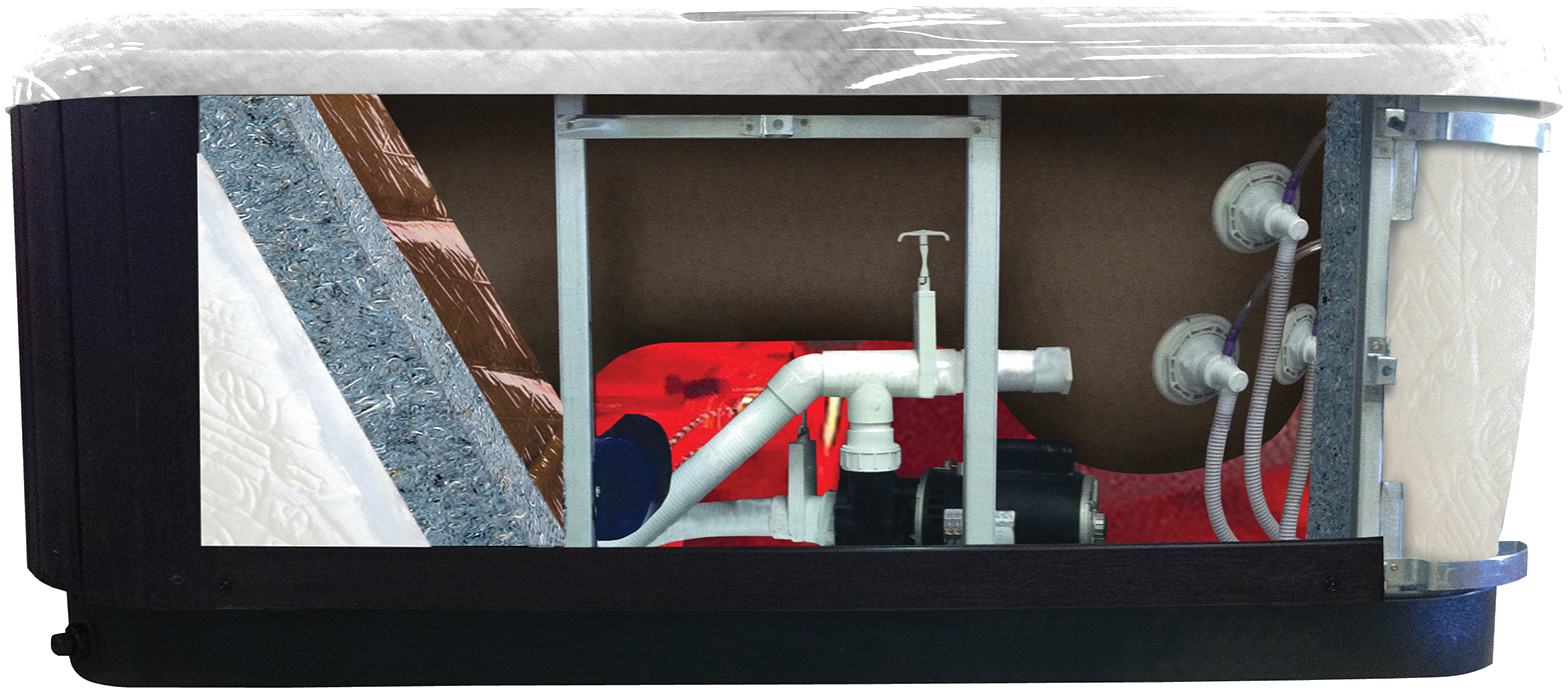
This is the approach VitaSpa uses with their Northern Exposure system. The cabinet is partially foamed around the shell, and then a copper reflective barrier with 3M Thinsulate insulation sits between the tub and the outer cabinet panels. The copper reflects heat back into the water rather than letting it radiate outward. Pipework is accessible for servicing, but the thermal performance is comparable to full-foam. In cold conditions it performs better than standard full-foam.
ReefSpa HeatSave
ReefSpa uses their HeatSave system, which combines high-density foam with a reflective foil layer around the shell. It’s a similar principle to Northern Exposure: reflect heat back rather than just slowing its escape. Both approaches achieve monthly running costs in the £30-50 range when conditions are reasonable.
A basic tub from a superstore or a budget online retailer often uses thin partial-foam or no insulation at all beyond a foam base. The engineering cost savings are passed to the customer as a lower purchase price. The difference shows up on the electricity bill within six months.
The lid matters more than most people expect
Around 60% of heat loss from a hot tub happens through the top. Not the sides, not the base. The lid.
A good cover is 4 inches thick at the centre, tapering to 3 inches at the edges. That taper helps water run off so the cover doesn’t sag and collect weight. The foam inside is high-density and encased in a vapour barrier so it doesn’t absorb water and get heavy over time. The lid clips down tightly at the sides with a thermal seal.
A cheap cover is thinner, has no vapour barrier on the foam, and fits loosely. After a year, the foam has absorbed moisture, the cover weighs a lot more, the thermal performance has dropped significantly, and heat is escaping around the edges.
A Covana automated cover (the rising gazebo-style cover) seals better than any manual cover because the seal is consistent all the way round every time it closes. If you have one, your heat retention is about as good as it gets. If you have a standard manual cover, replacing a worn cover is one of the cheapest ways to reduce monthly running costs.
Temperature: every degree costs money
38°C is the standard recommendation and the sweet spot in terms of running costs versus comfort. The water feels genuinely warm, hydrotherapy works properly at that temperature, and the heater doesn’t have to fight hard to hold it in normal UK conditions.
40°C is the maximum allowed on UK hot tubs and some customers prefer it. It’s noticeably more expensive to maintain. The heater fires more often, particularly in winter when ambient temperatures drop. The difference is real but not enormous: roughly 15-20% more electricity compared to 38°C, depending on conditions.
Some customers drop the temperature to 35°C when the tub won’t be used for a week or more. That’s a sensible approach. Turning the heater fully off and reheating from cold is usually a false economy: reheating 1,200 litres from 10°C to 38°C uses roughly 13kWh, which at 24.5p costs about £3.20. Maintaining temperature for a week at modest settings costs less than that.
A worked example
A VitaSpa 500 Series (5-seater) set at 38°C, used four times a week, with Northern Exposure insulation, in a sheltered Hampshire garden. Realistic monthly running cost: £35-45.
In winter (ambient temperatures around 5°C rather than 15°C), that rises to around £45-60. In a mild month, closer to £30.
Those are not marketing estimates. They’re based on real customer feedback and the energy draw figures from the tub’s specification sheet, applied to the current unit rate.
The real comparison: cheap tub vs good tub over five years
Take a budget hard-sided tub at £3,500 versus a VitaSpa with Northern Exposure at £7,500. The price difference is £4,000.
If the budget tub costs £80/month to run and the VitaSpa costs £40/month, the running cost difference is £40/month, or £480 per year. Over five years, that’s £2,400 in electricity savings from the better tub. Not the full gap, but it narrows it considerably. Factor in the difference in build quality, component lifespan, and servicing frequency, and the numbers get closer still.
We are not saying every customer should buy the expensive tub. Some customers will use their tub twice a month and the difference in running costs doesn’t matter much. Some will use it twice a day and the insulation pays for itself faster. Knowing the numbers lets you make your own call.
What to ask before you buy
Any reputable dealer should be able to tell you the heater wattage, the insulation specification (full-foam, partial-foam, barrier type), the circulation pump draw, and what the cover is rated at. If they can’t or won’t give you those numbers, that tells you something.
We can give you those figures for every tub we sell. We’ll also tell you if we think the running costs for a particular model are higher than the industry average, because we would rather you go in with accurate expectations than come back frustrated six months later.
The costs are real. They are not frightening. A well-built hot tub at 38°C costs less per month than most households spend on streaming services combined. But insulation is what makes that true, and it’s worth asking about before you sign anything.